-
05 Apr
#24 event report: Sex Industry in China: Social and Political Context
March 26, 2013, Bridge Café (Wudaokou)
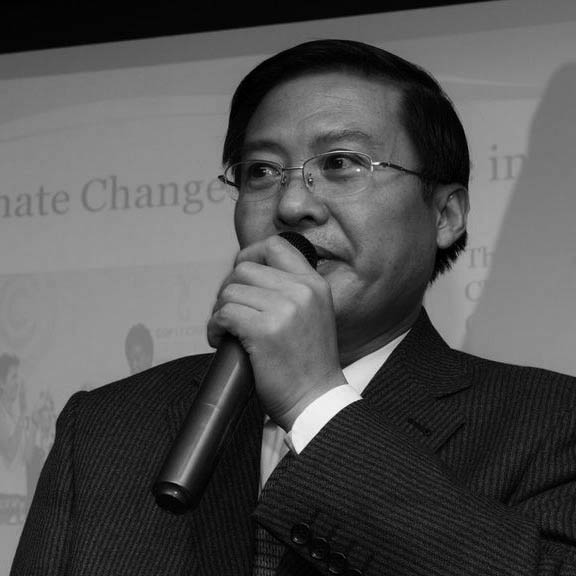
Speaker: Prof. Dr. HUANG Yingying 黄盈盈, Department of Sociology, Renmin University of China; Deputy Director, Institute of Sexuality and Gender
Presentation
To provide context for the topic of discussion, Dr. Huang opened her speech by highlighting the contrasting images of sexuality in China. On one hand, imperial practices like foot-binding, court concubines, and polygamous ernai (二奶; literally “second milk”) infuse the concept of prostitution with a sort of artistic and aesthetic beauty. More common to contemporary observers is the asexual, androgynous communist youth portrayed most often by the Cultural Revolution’s Red Guards.
Dr. Huang explained how in ancient China, prostitutes were revered for their numerous talents, which extended far beyond sexual techniques to include poetry, calligraphy, singing, dancing, and playing various instruments. Such views are evidenced by documentation of Tang dynasty brothels as well as records kept by high court officials. The historical shift in views on Chinese prostitution began with the May Fourth Movement and its efforts to erase what many contemporaries saw as poisonous and outdated cultural practices. The ideas that began in the early 20th century culminated shortly after the communist revolution, when Mao declared that the government had successfully eradicated both prostitution and sexually transmitted diseases (STDs) from China. Dr. Huang noted the political significance of this supposed accomplishment, as modern politicians often invoke it to rile up support for anti-prostitution campaigns: “If Mao did it, why can’t we?” During the early stages of China’s ongoing reform period, the government maintained that foreigners were to blame prostitution’s resurgence, as evidenced by propaganda slogans like “reborn of the dead ash” and “flies from outside.”
The second wave of anti-prostitution, as Dr. Huang argued, began in 1981 with a declaration prohibiting the sale of sexual services. Organizing acts of prostitution is a criminal offense, and buying or selling sex is punishable by up to 15 days’ detention and a RMB 5000 fine for first-time offenders, as well as six months of re-education. Perhaps even more of a deterrent is the notification of family members that is surely meant to incur a shocking loss of face in a society focused on outward appearances. Every year, the government carries out saohuang (扫黄; literally “sweep the yellow/carnal) campaigns that purport to help rid China of its illegal sex trade. In practice, however, the industry continues to thrive.
Dr. Huang then provided a brief conceptual framework of Chinese sex industry workers. Most prostitutes in China are female sex workers (FSWs), though gigolo “money boys” (MBs) and trans-gender workers do exist, too. Many FSWs have managers who solicit clients; these managers are often middle-aged and may even carry babies with them as they look for customers. Dr. Huang stated that outside of those who work in the industry, there are but a small number of grassroots organizations that work with sex workers. As they have no legal status in China, such groups are rare, and none existed as late as ten years ago. Today, Dr. Huang estimates that somewhere around seven such groups operate in China, not including any international organizations. One problem for the shockingly low presence of such grassroots organizations is that sex industry workers do not have a cohesive sense of community identity.
Moving into further detail, Dr. Huang shared some of her personal observations regarding recent changes in the Chinese sex industry, which she has been observing since 1999. Many of today’s FSWs, as Dr. Huang noted, view the prostitutes of the 1970s and 1980s as joining their profession simply for hedonistic pleasure, whereas they view themselves as earning money for their families. Surprisingly, the price of sex is falling: Dr. Huang said that in one area she studied, what cost RMB 250 only ten years ago is now available for RMB 130, a trend that is starkly different from the continued rise in housing prices and CPI. Today, there is a wider range of sexual services available, including pockets of S&M workers, as well as higher mobility not only in terms of regional borders, but also a larger percentage of workers who also have other jobs. One disconcerting development is the increasing overlap with drug use.
To understand the multiple facets of the sex industry in China, Dr. Huang chose three lenses through which the audience could examine prostitution: individual, organizational, and structural levels. On the individual level, Dr. Huang shared her research on how FSWs viewed their profession. There was a strong focus on using not only one’s body, but also one’s brain, in order to survive and make money. Dr. Huang observed stigmas against FSWs who were seen as too erotic, which could mean enjoying work too much or providing services outside of vaginal intercourse, such as oral or anal sex. FSWs were often concerned about abortion-induced infertility as well as general health issues, as well as fear of being discovered by their families. In general, she noted that most FSWs work far from their hometowns. Another common theme that Dr. Huang continually referred to was the desire among many FSWs to live a fashionable, urban lifestyle that was endowed to them through their profession and the money they made by selling their bodies.
On an organizational level, Dr. Huang detailed the hierarchy of venues used for prostitutions. Large hotels and nightclubs rank as some of the most high-end locations in the sex trade. Massage parlors and KTV bars formed another tier, while hair salons came in below that. Standing on the unequivocal lowest rung are street callers, who solicit clients themselves. Dr. Huang noted how an increasingly large segment of FSWs are based on the internet. Lastly, she suggested that the most coveted status was that of the “second wife,” for whom the identity of sex worker begins to fade in some respects. In addition to venues, Dr. Huang also classified the types of working relationships most common among FSWs. One of the most common arrangements, referred to as employment-based prostitution, involves a manager who takes a 20-30% fee for every sex act traded. FSWs with a “housing with work” would be free to leave whenever they pleased, though many felt social pressure and unspoken control yielded by the managers. Lastly, Dr. Huang said that in the 20 red-light districts she has studied, only in two did she find situations where FSWs had been forced into semi-slavery types of prostitution. Another even rarer employment situation involved self-employed FSWs forming a sort of co-op that employed a manger who was subject to the dismissal of the FSWs themselves.
Further broadening the scope of discussion, Dr. Huang approached Chinese prostitution from a structural viewpoint. While many governmental authorities claim that prostitution leads to corruption, she argued that the reverse is true, citing a rumor that European sex workers attracted Chinese clients on vacation by exclaiming, “We can issue you a fapiao!” (发票; official invoice) Dr. Huang argued that compared to 30 years ago, FSWs have much higher social mobility in today’s China. She also cited the work of a colleague, Dr. Pan Suiying, who argues that over the past 30 years, China has undergone a sexual revolution, not only with regards to prostitution, but also views towards issues like premarital sex and gender identity. In the end, however, the stigma towards prostitutes remains strong, contributing a great deal to ongoing physical and psychological violence.
Moving forward, Dr. Huang highlighted two recent policy changes that have significantly affected the sex industry in China. First, she referenced an initiative by the Health Bureau system to move towards 100% condom use and improved health education. While some argue otherwise, Dr. Huang holds that this in no way indicates a move towards the legalization of prostitution. The second and more far-reaching policy change began in 2010, since when crackdowns on brothels have increased in severity and frequency. Unlike the previously discussed policy, this is implemented by the Public Security Bureau system, which has vastly different goals and motivations. While it used to be the case that street workers were the most susceptible to police intervention, government authorities recently shut down Beijing’s notorious “Heaven on Earth” (天上人间) nightclub, where any wallet slimmer than RMB 2000 had no chance of purchasing an illicit service.
Despite such developments, Dr. Huang asserts that the market for purchased sex continues to grow in China, citing a nationwide survey that shows the percentage of sex clients has risen from 7% to 9% of the male population. Furthermore, she observed how the FSWs and their managers have found creative methods to avoid the authorities. Instead of running operations out of the front door of their establishments, many would use the back entrance instead; others wait at home for notification via cell phone or internet. Work hours have changed as well: Dr. Huang told of one street walker who is up at 5am to solicit retirees who rise early to buy breakfast, and perhaps a bit extra. Drawing her listeners back to the personal situations of each FSW, Dr. Huang shared quotations of women who are determined to work despite the hardships incurred by authorities.
Sadly, the new crackdowns have created some unforeseen drawbacks. Of greatest concern is the increased gender-based violence at the hands of police and also local gangs. The health service delivery system, which already faced serious challenges, is now being forced underground, especially as used condoms have been used as evidence to convict FSWs, further lowering the rate of condom use. Finally, the new anti-prostitution campaigns have created more expansive sexual networks as FSWs move from large urban centers into smaller cities and even towns, where enforcement is much more lax.
To finish her speech, Dr. Huang made a policy proposal, one that strives to move beyond the dialogue of rights and legalization. Instead, she argued for increased cooperation between FSWs and local police in order to assuage some of the previously cited problems.
Q&A
The Q&A session began with inquiries into forced prostitution and human trafficking. Dr. Huang noted that she classifies “semi-slave” FSW relationships as ones marked by physical force; economic force is much harder to define, though she did remind the audience that all FSWs are trying to avoid violent situations, so the recent wave of crackdowns is indeed alarming. One issue with linking prostitution and human trafficking is that in China, trafficking often exists outside the realm of the sex industry, as with imported wives and laborers from Southeast Asia. Responding to a question on public views towards the sex trade, Dr. Huang explained that 40% of respondents believed that the government punishments for those involved in prostitution were too harsh.
Over 220 guests packed themselves into the venue to attend this event, and dozens more left once the room reached capacity. Following the formal discussion was further intellectual exchange over food and drink, strengthening the ever-expanding ThinkIN China community.
Read more... -
04 Apr
ZHANG Qingmin
Prof. Dr. ZHANG Qingmin 张清敏
Professor, Center for International & Strategic Studies, School of International Studies, Peking University
 Prof. ZHANG works at the Center for International & Strategic Studies in the School of International Studies at Peking University. He previously taught at China Foreign Affairs University, and has been a Fulbright Visiting Scholar at George Washington University from 2004-2005. He received his Ph.D. from China Foreign Affairs University and his MA from Brigham Young University. His teaching and research includes China’s Foreign Policy, U.S. Foreign Policy, diplomatic studies, theory of foreign policy analysis, and Sino-US relations.
Read more... -
03 Apr
ZHANG Ruijie
Dr. ZHANG Ruijie 张瑞杰
Managing Director, Low Carbon City China Programme (LCCC), Beijing
 ZHANG Ruijie is the Managing Director of Low Carbon City China Program Management Office (LCCC PMO), Secretary-general of Low Carbon Economy Committee and Director of International Cooperation Department, CAPEC. His major roles are to provide professional service to Chinese cities on the way to low carbon and sustainable urbanization through the development of tools and initiatives in sectors of green building, green industry, low carbon transport, low carbon city policy and municipal management, so as to promote low carbon development in Chinese cities. Prior to joining LCCC PMO, he was the Director of International Business Department, Invest Beijing International, with particular responsibility for matching infrastructure projects with funds. He has been involved in international business for more than 20 years visiting more than 50 countries. He worked as consulting engineer in African and Southeastern countries for more than 10 years and has published extensively on low carbon development, infrastructure financing, global warming, energy efficiency and renewable energy issues.
Read more... -
02 Apr
ZHAO Changhui
Dr. ZHAO Changhui 赵昌会
Chief Country Risk Analyst, Export-Import Bank of China (EXIM Bank)
 Dr. ZHAO Changhui is veteran manager at The Export-Import Bank of China (China Eximbank), specializing in China’s national security policy. His expertise lies in geo-economics of natural resources, energy geo-politics, world politics, international security, global economy, international monetary regime, all-region studies and country risk assessment. His Ph.D. discipline in history of economics thought at Renmin University of China was completed in 2004. An M.A. candidate in economics with Beijing Normal University in 2001, he received his B.A. in economics from Tianjin University of Economics and Finance in 1984. Zhao is the designer of China’s present-day strategy toward Africa and inventor of Forum on China–Africa Cooperation (FOCAC), as well as participating in many think-tanks such as China Society for International Finance (CSIF), Asia-Africa Development and Exchange Society (AADES), Council on National Security Policy (CNSP), and the International Institute for Strategic Studies (IISS). Dr Zhao was in charge of North American and Oceanian affairs with Bank of China during 1985–1994, starting at People’s Bank of China.
Read more... -
01 Apr
ZHU Feng
Prof. Dr. ZHU Feng 朱锋
Deputy Director of the Center for International & Strategic Studies (CISS), School of International Studies, Peking University
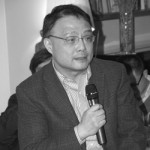 Professor ZHU began his undergraduate studies at the Department of International Politics at Peking University in 1981 and received his PhD. from Peking University in 1991. He is currently a professor at the university’s School of International Studies and Deputy Director of the Center for International & Strategic Studies (CISS). He is a leading Chinese security expert and senior research fellow of the Center for Peace and Development of China.
Publications
- Ballistic Missile Defense and International Security, Shanghai: Shanghai People’s Press, 2001
- International Relations Theory and East Asian Security, Beijing: People’s University Press, 2007
- co-edited with Prof. Robert S. Ross, China’s Ascent: Power, Security, and Furure of International politics, Cornell University Press, 2008
Read more... -
10 Mar
#23 event report: Looking into the Future: China’s Low Carbon Policies
February 24, 2013, Bridge Café (Wudaokou)
Speaker: Dr. ZHANG Ruijie 张瑞杰, Managing Director, Low Carbon City China Programme, Beijing
Presentation
Dr. Zhang opened his talk by framing climate change as a global concern. He underlined the importance of mitigating the adverse effects of climate change as an international policy issue, and as a challenge for sustainable development. He pointed out that as early as the nineteenth century people started realizing that human actions and societal developments take a toll on the environment. The increased emission of carbon dioxide and its immediate consequence known as a greenhouse effect are unintended consequences of industrialization. Moreover, Dr. Zhang considers the greenhouse gas emission not only a factor of climate change, but also pollution, other natural imbalances and disasters.
Dr. Zhang outlined what he calls a “common consensus” of the international community that not only frames climate change as a policy challenge, but also puts it “at the heart of scientific and political debates.” Individual governments, but also international organizations – in the first place the United Nations (UN) – have been working hard to address the problem of mitigating the adverse effects of climate change. Dr. Zhang outlined several key historic developments, such as the 1992 Earth Summit which resulted with the signing of the United Nations Framework Convention on Climate Change; he also elaborated on the importance of the 1997 Kyoto protocol as the most important joint effort of the international community, and especially of the industrialized and highly developed countries to take action on the climate change issue. This last point is of special importance, especially when one has China in perspective – the global climate change policy dialogue has been marked by a tug-of-war between the developed and the developing countries on points such as the capacities of individual governments to face the climate change issue, and the scope of eventual commitment to legally binding norms – in fact, the biggest step forwards towards taking a global action on climate change have been always the result of reaching a consensus between these two sides.
Then Dr. Zhang spoke of the UN initiatives and other global efforts to mitigate climate change consequences, as well as the most notable achievements. He listed the Bali Roadmap adopted in 2007 as an important step forward; then spoke of the importance of the Climate Change Conference in Copenhagen, 2009 and the consensus of pursuing the long term goal of limiting the global average increase of the temperature, as well as the obligations the developed countries made for assisting developing countries to raise funds and implement policy measures. Then Dr. Zhang discussed the 2010 Conference in Cancun, the 2011 Conference in Durban and the 2012 Conference in Doha, as well as the developments and challenges regarding the extension of the Kyoto protocol.
Speaking of China’s domestic policies, measures and actions taken to address climate change and to promote low carbon development, Dr. Zhang pointed out China had introduced low carbon principles several years ago. In 2006, the government set the goal of reducing the per-unit GDP energy consumption by 20 percent from that of 2005, by 2010. In 2007 China became the first developing country in the world to formulate and embark on the implementation of a national program to address the effects of climate change and to reverse climate change. In 2009, Chinese leaders adopted the goal of reducing the per-unit GDP greenhouse gas emission by 40-45% compared to the level of 2005, by 2020.
Read more... -
10 Dec
#22 event report: The Question of Identity in Cultural China
December 4, 2012, Bridge Café (Wudaokou)
Prof. Dr. TU Weiming 杜维明, Director of the Institute for Advanced Humanistic Studies, Peking University
Presentation
With Bridge Café more crowded than Beijing’s Line 2 subway at rush hour, Professor Tu captured the attention of listeners by recounting the intellectual history of “文化中国,” or “Cultural China.” His narrative moved from the field’s genesis among Malaysian Chinese researchers on Taiwan to concepts of an endless periphery of Cultural China, one in which there exists no center. Professor Tu then outlined his core philosophy regarding the three symbolic universes of Cultural China: First, the East Asian countries with Han Chinese ethnic majorities; second, the Chinese diaspora within and beyond East Asia; and third, most controversially, any person concerned about China in a long-term perspective, including diplomats, journalists, and those who attend ThinkIN China events. Professor Tu emphasized that membership in the third group is not limited to those with pro-China attitudes, as both “dragon-slayers” and “panda-huggers” are included.
The latter half of the lecture touched upon the tensions within contemporary Cultural China. Citing various statistics, Professor Tu noted the implications of varied cultural identification among Chinese living in Taiwan or Hong Kong, as many seem themselves as Chinese in the sense of “华人” but not as “中国人,” the latter term increasingly interpreted as a political identity affiliated with the mainland government. He also noted the need for diversity as a prerequisite for harmony. In closing, Professor Tu highlighted the two most pressing challenges within Cultural China that Communist Party leaders faces. First, he argued for a reevaluation of religion and the need for a serious dialogue between religion and science as guiding forces in China’s development. Second, Professor Tu extoled the need to develop culture alongside the economy, particularly in light of what he deemed the death of the five main Confucian values and the unhealthy growth of a “market society” alongside the market economy.
Q&A
Audience questions sparked intriguing anecdotes regarding Professor Tu’s first interactions with skeptical Tibetan exiles as well as deepened intellectual discourse on the syncretic nature of Confucian philosophy. In addition, Professor Tu noted that despite his American citizenship, he does identify as a “中国人.” With time running short, Professor Tu received a standing ovation before the discussions continued at a year-end celebration
Read more... -
25 Nov
#21 event report: China’s Investments in Europe
November 20, 2012, Bridge Café (Wudaokou)
Speaker: Dr. ZHAO Changhui 赵昌会, Senior Country Risk Analyst, China ExIm Bank
Presentation
Dr. Zhao opened his lecture with an overview of the state of the global economy in 2012. His main impression is that overall, most of the countries are having difficult time to recover from the recession. He argued that the gloomy reality and the pessimistic prospects for the future are especially the case in Europe, which has been severely affected by the global economic crisis.
Dr. Zhao believes that the financial crisis, which he stated explicitly as originating from US and Europe, is changing the world we’re living in and the ways we think and act in terms of economic policy. The economic policies in Europe have been predominantly focused on overcoming the crisis. The outcome of this has been the adoptions of policies that are not always popular or efficient, such as austerity programs; unconditional and unreasonable revenues imposed on citizens and companies. The problems are especially severe in Greece and other peripheral economies where the “workforce wants to evade responsibility” and “the government is confronted with severe constraints” and can’t spend additional money on bailouts.
In this respect, the Sino-European economic ties have been as well primarily focused on engaging in joint efforts to alleviate the effects of the crisis, especially in the countries of the Eurozone.
Dr. Zhao briefly discussed the example of the way the US deals with the crisis, which he vaguely defined as increased public spending through printing money.
He also discussed the intellectual contributions by leading economists such as Joseph Stiglitz and Paul Krugman – especially the former being a sound critic of both the US and EU policies, arguing for stimulating public spending and praising the Chinese way of dealing with the crisis. Dr. Zhao tends to agree with this view, arguing that a damaged economy first needs recovery, and as a follow-up, pursuit of growth, or to cite him: “when you are seriously ill, it’s important first to recover, and then to do body building.”
In this sense, he believes that the pro-austerity economic policy of crisis-struck Europe is a mistake – the austerity freezes economic activity and has long-term repercussions. This, in his estimation, will lead to a decade-long recovery for many countries in the Eurozone – even authoritative leaders such as the German chancellor Merkel by now admit that it will take at least five years for Europe to bounce back.
These developments in Europe, as Dr. Zhao puts it, are an obvious problem for China. The government is eager to take action towards helping Europe to recover, but its options so far remain very limited. It also has its own interests when it comes to investing in Europe – China wants to spend its surplus fast, because of potential depreciation of the renminbi for instance – hence trying very hard to push its investment to go global.
One of the main problems of the Chinese government and investors is that they don’t really know European countries or are not interested in them – which as Dr. Zhao said, might sound shocking to the European audience, given the historic importance of Europe. The reason for this is that in the aftermath of the crisis Europe is not in the center anymore. Hence, China first needs to realize what is going on in Europe – both in terms of different individual countries and on the level of the European Union.
Dr. Zhao pointed out that there is the problem of protectionism mushrooming in the core European economies. He ironically noted that free trade in today’s world remains illusion, as we can’t just hop on a plane on to go and do business. The Doha round has lost its steam – as nobody really is pushing for advancement of the free trade talks. Protectionism is a major bottleneck for the trade volume even for the major trade partners in the world, China and the EU. Protectionism, Dr. Zhao noted, remains an internal European problem, as even within EU, some of the peripheral countries can’t sell whatever they want and they want in the rest of the Union. Protectionism in times of crisis is related with the increased level of nationalist sentiments and the return of geo-economic reasoning.
Q&A
In the Q&A session, Dr. Zhao discussed a question on the strategy of the Ex-Im Bank and whether it follows purely economic reasoning or it also follows political interest and connections. He argued that political connections have little value, especially compared to the past – China is growingly careful where it invests and its strategists are more market savvy. In the aftermath of the Libya crisis, where China had invested based on political ties, it suffered huge loss – this and similar cases only perpetuated the trend of moving beyond politically motivated investment.
Dr. Zhao defended the strategy of China to deal with the crisis via stimulus package. He also argued against the danger of growing inflation in China, and characterized China’s strategy as sustainable.
The speech started with a half hour delay, however, the turnout was excellent; the convivial activity afterwards was a great success and the speaker enthusiastically participated.
(Report by Anastas Vangeli)
Read more... -
02 Nov
#20 event report: New Leaders, New Policies? 18th Congress and China-USA Relations
October 30, 2012, Bridge Café (Wudaokou)
Speaker: Prof. Dr. XIE Tao 谢韬, Beijing Foreign Studies University, American Studies Center
Presentation
Given the proximity to the American election and Chinese 18th Party Congress, Professor Xie Tao spoke to a captivated audience on the future of China-USA relations. His core argument, supported by a wide range of evidence, was that despite spouts of angry rhetoric, China-USA relations faces no immediate major threats; however, the potential problems that lie ahead could, if unaddressed, lead to conflict or even military confrontation. Positing that the relationship remains strong, Professor Xie cited economic statistics as well as the burgeoning number of Chinese students studying at American universities. Yet he acknowledged trade disputes, sometimes-vitriolic nationalism, and the adjustment to both countries’ changing roles in maintaining Pacific security as the most prescient potential threats to amicable relations.
To address such issues, Professor Xie advocated for both governments to inform their respective publics about the importance and complexities of China-USA relations. He lightly chastised both sides for not using their pulpits to speak about their trans-Pacific partners. Despite President Obama’s aggressive rhetoric in the presidential debates, Professor Xie argued that his re-election would improve relations with China, as second-term presidents tend to implement foreign policy that solidifies a positive legacy in the White House. As for China, he further prescribed two new policies: first, for top leaders to increase transparency in their decision-making process; second, for Chinese leaders to present themselves as more personable and less rigid.
Q&A
The Q&A session covered a range of topics, including the paramount importance of cyber-security, barriers to the European Union acting as an international mediator, and China’s potential dispatch of warships to guard the shipping lanes from pirates off the coast of East Africa. With regard to political reform, Professor Xie emphasized the potential for a relaxation of internal censorship and extension of local elections to the county level, both of which would almost certainly win high praise from the United States. Driving such reforms, argued Professor Xie, would be the third “cycle of legitimacy” for authoritarian regime, which Professor Xie deemed “post-industrial values.” With many questions still unanswered and audience members captivated as ever, we regrettably had to end the discussion, as we had already surpassed the allotted 90 minutes.
Professor Xie received an extended applause before participants moved to EATalia for continued discussions and a special birthday celebration for ThinkIN China Senior Enrico Fardella.
(Report by Frauke Austermann and Matthias Niedenführ)
Read more... -
20 Jun
Matthias Niedenführ: Adapting Postmodern and Postcolonial thought to the needs of China
Matthias Niedenführ, European Centre for Chinese Studies (ECCS), Peking University / Tübingen University
Prof. Dr. Lei Yi (雷颐) is a renowned historian and intellectual at the Institute of Modern History at the Chinese Academy of Social Sciences (CASS). He publishes extensively on late Qing history and frequently writes essays and comments on current events in the press and in his blog on Weibo (China’s equivalent of Twitter).
In his presentation “Interpretation of Post-modern Theory and Post-colonial Theory in the Context of China’s Modernity“ (中国现代语境中的后现代与后殖民阐释) he critically analyzes both the way that these theories have been adopted and interpreted in China and the contradictions that “Post-School” intellectuals in China tend to ignore. On top of that he also questions to some degree the legitimacy of the original proponents of Post-Colonial theory when it comes to “speaking for the Third World”.
“Third World” status of Post-Colonial theorists
Lei states that although many influential post-colonial theorists like Edward Said, Prasenjit Duara, Arif Dirlik, etc. are of Non-Caucasian ancestry and have a “Third World” background, they have long lived in Western countries and attained notable teaching positions there after having completely shed off the “Third World” label. Only after attaining a certain status did they start to criticize Euro-Centrism in “Western academia”. They declared themselves to be representatives of a “Third World” which they have left long ago and whose reality they have little knowledge of. Lei criticizes that for them “Third World” only is a useful tool, even ”academic capital” they can exploit to gain status. They have embedded themselves firmly in “Western academia” which they themselves criticize in their theoretic works.
Do some extent I agree with him that some of these theorists have attained a star-status in Western academia and actually have little in common with the societies they supposedly represent. Only when these Post-colonial intellectuals more or less play along the rules of the game they criticize with their theories do they reach an audience and gain a critical mass of academic prowess. While this makes them vulnerable for criticism that it itself does not completely discredit their arguments. It is not so much a lack of legitimacy but this actually brings us back to the original problem: Intellectuals of Non-Western countries tend to be marginalized. But this is also true of Western intellectuals of Non-English speaking countries (Russia, France, Germany, Italy, etc.) as long as they don’t publish in English and sustain close academic ties with the academic capitals in the Anglo-American world.
Lei Yi’s criticism of Post Modern and Post-Colonial theorists as being essentially nationalists
Lei criticizes proponents of Chinese-style Post-colonial theory for indiscriminately targeting others with harsh language and labeling others to be “post-colonized” for making references to Western art or literature, such as a young nationalist scholar who branded Yang Jiang “post-colonized” for comparing a Chinese girl with Mona Lisa. Since said scholar himself compared fervent young Chinese to the adolescent in Salinger’s novel “Catcher of the Rye”, this form of branding others is not helpful. Lei points out that already in Zhang Zhidong’s time it was not possible anymore to completely avoid foreign influenced terms since Western terms by way of Japanese translation already were deeply engrained in the Chinese language.
Lei has a valid point here: “Post-Colonialized” can easily be used as a label to criticize others. A Chinese scholar’s reference to Western notions or his use of Western terms should not be the grounds to brand him. In so doing we would deprive him of his words. A very effective way of keeping someone’s mouth shut, but not something anybody should accept in academia, whether in China or elsewhere.
Application of Postmodern and Postcolonial thought in China
Lei argues that Chinese intellectuals who accepted post-modern and post-colonial theories have done so without duly processing them, without fully understanding their meaning and the context in which they emerged. These ideas underwent a “horizontal transformation” from Europe to China, something he calls a “dual dislocation” in time and space.
The adaption of these theories in China often disregards their original intentions and leads to “self-contradictions”. Postmodern intellectuals identified power relations and supported “weak groups” – women, ethnic and social minorities – “vis-à-vis” the strong. In the same way, Post-Colonial thinkers criticize Euro-centrism in science which tends to overlook valuable input from intellectuals from other world regions.
But in China criticism of the Western dominated discourse concentrates on the criticism of enlightenment. They strongly question whether the value of “universal humanity” or “universal human rights” actually exist, or whether this was just another tool for “Western cultural imperialists” to subdue China. Post-Modern arguments are used – if not outright abused – to justify the exact opposite of what Post-Modern intellectuals tried to stand for. They favor the (politically controlled) mainstream and tend to overtone “noise” (i.e. differing or even dissenting views).
Lei argues that for Chinese intellectuals like Lin Zexu, Chen Duxiu, Lu Xun, etc. the Western model was not necessarily something to be implemented directly, but they rather reacted to internal needs of China and chose applicable elements of it. “Post-Modern and Post-Colonial theory” can only become something useful for China, when they are processed and adapted to the Chinese local context, the actual social conditions.
Lei knows how to walk the thin line. On one hand, in China’s current “maintain social stability environment” (维稳weiwen), Post-Colonial theory is still applied to support the Nationalist paradigm, to support China against the West. But since the balance of power is gradually shifting towards China, the validity of this argument can be doubted. The analysis of power relations within China by applying Post-Modern thought on the other hand can bring unwanted results and might better be avoided.
June 10, 2012
Read more... -
06 JunLa evolución del culturismo calidad testosterone undecanoate con el envio video.avi de motivación de culturismo
Lei Yi: Interpretation of “Post-modern Theory” and “Post-colonial Theory” in the Context of China’s Modernity
中国现代语境中的后现代与后殖民阐释
Interpretation of „Post-modern Theory“ and „Post-colonial Theory“ in the Context of China’s „Modernity“by Prof. Dr. LEI Yi 雷颐
Professor, Institute for Modern Chinese History, Chinese Academy of Social Sciences一, “后现代”与“后殖民”
1. „Post-modern“ (后现代 hòu xiàndài) and „Postcolonial“ (后殖民 hòu zhímín)“后殖民理论”以美国哥伦比亚大学阿拉伯裔教授爱德华.赛义德(Edward W.Said)的 巨著《东方主义》为代表, 所谓“后殖民”是指西方帝国主义在非西方地区殖民统治 结束后的状况。
In his monumental work „Orientalism“ (东方主义 dōngfāng zhǔyì) Edward. W. Said, Professor of Arab Studies at Columbia University, introduces a „post-colonial theory“ (后殖民理论 hòu zhímín lǐlùn), in which there still is a status of „Western imperialism“ (西方帝国主义 xīfāng dìguó zhǔyì) in non-Western regions after the end of colonial rule.这些地区虽然在国家主权上已经独立,但在经济、文化上的“殖民”并未结束,殖民势 力尤其借助于其精心建立起来的“文化霸权”或“文化帝国主义”来维系其利益。 Although these areas became independent in terms of national sovereignty (国家主权 guójiā zhǔquán), in the economic and cultural sense the „colonial“ status still prevails. The former colonial powers can maintain their interests, especially through the means of their well-established „cultural hegemony“ (文化霸权 wénhuà bàquán) or „cultural imperialism“ (文化帝国主义 wénhuà dìguó zhǔyì).
赛义德率先指出西方世界长期以来是如何带有偏见地凝视东方,如何以科学、学术研究 之名发展出一整套关于“东方”的权力话语(discourse)。他认为西方学者在研究“东 方”时,将自己置于“主体”, 而将“东方”作为“他者”(Other)。
Said was the first to point out how the Western world has long been holding a biased and fixed view towards the East. He also points out that in the name of science and academic research a whole power discourse (权力话语 quánlì huàyǔ) about the „Orient“ / the „East“ (东方 dōngfāng) was developed. He believes that whenever Western scholars study the „East“ they put themselves in the position of the „main subject“ (主体 zhǔtǐ) but treat the „East“ as „the Other“ (他者 tāzhě).其学术研究虽然看起来十分客观, 实际却有意无意地以自己的文化来曲解“东方”,反 映了西方在客观世界、政治和社会生活、文学作品中对东方所持的根深蒂固的偏见。 Although their academic research appears to be fairly objective, they – intentionally or unintentionally – misinterpret the „East“ through the lenses of their own culture. This would reflect a deep-rooted Western prejudice (偏见 piānjiàn) towards the „East“ which prevails in the objective world, in political and social life, and in literary works.
以此为先锋,西方学术界出现了由常住西方、基本上是在西方大学任教的非白人、多数 是来自第三世界的学者对西方理论、学术中的欧洲中心论倾向和西方文化霸权进行的挑 战和批判。Said was a pioneer in this research. Voices of scholars appeared in Western academia that challenge and criticize Western theories, Eurocentric (欧洲中心论 Ōuzhōu zhōngxīn lùn) tendencies and “Western cultural hegemony” in sciences. These scholars are permanent residents in Western countries, are basically of Non-Caucasian/Non-white (非白人 fēi báirén) descent and maintain teaching positions in Western universities. The better part of them is from Third World countries.
Read more...24 May#17 event report: Egyptian Islamists’ Foreign Policy towards China
May 23, 2012, Bridge Café (Wudaokou)
Speaker: Prof. Dr. WANG Suolao 王锁劳, Peking University, School of International Studies
Presentation
Being fluent in both English and Arabic Professor Wang held a very up to date and informative talk with interesting anecdotes from his personal experiences and research on Egyptian Islamists foreign policy towards China. He started off with embedding his main argument in latest analysis on the upcoming Egyptian Presidential elections. He presented the the candidates on the ballot with emphasis on the 6 candidates with high chances. The biggest trade-off therein is that experienced candidates have the disadvantage of being linked to the former regime whilst genuinely new candidates, many of them representing Islamic political groupings, do not have experience in running the country. Prof. Wang sees the rise of Islamic political groupings as a general trend in the region and of the Arab Spring. “North Africa is becoming green again”.
This can be seen as a factor of uncertainty for the Chinese leadership as it has no experience in conducting politics or business with the new potential Islamic leaders. Prof. Wang then went on to distinguish the two main groups of Islamic political groupings, notably the Muslim Brotherhood and the even more conservative Salafists, presenting their background, organizational structure, etc. In terms of foreign policy both groups plan to focus on the “Three Rings” of countries with African, Arab and Islamic background, reduce the dependence on the US and to hold a referendum on the future of the domestically disputed Egyptian-Israeli Peace Accord (1979). Both groups have almost similar foreign policy schemes, with the Salafists entertaining a special focus on the Nile river basin countries.
Notably the Muslim Brotherhood has great interest in good relations with China. They show interest in learning from Chinas experiences in rapid development and in diversifying African development dependence on Western countries. Trade is certainly a central motive as well. Reviving the Egyptian tourist industry after the Revolution by attracting Chinese tourists to Egypt to make up of for the losses in Western tourists who avoided the country after the tumultuous change of power in early 2011 is another. China and Egypt, both civilizations with very long histories, share dissatisfaction about US-American “hegemony”. However, different views in the area of human rights may cause tensions between the potential new Egyptian leadership and the PRC. Especially the natural sympathies young Egyptians have for the repressed Uighur minority that are fellow Muslim “brothers” may prove to be a stumbling bloc for the good ties of Egypt with China.
Q&A
The QnA round was vivid with questions such as establishing a democratic system with an Islamic leadership and Chinese interests in Egypt. Prof. Wang considers that chances are high that Egypt can be a case of reconciling a democratic political system with Islamic values, similar to the Turkish model. After all, the success of Islamists will boil down to bread and butter issues. If an Islamic Egyptian government cannot deliver an appropriate level of economic success and welfare for Egyptians, they might soon be outvoted of power. Socialist Revolution of Nasser and the now defunct Capitalist approach of Mubarak are examples. The high birthrate of Egypt that is relatively higher than the growth in GDP results in unemployment among young people, the driving force for the Arab Spring. This is the most volatile group that the new President of Egypt needs to accommodate.
Prof. Wang managed to engage well in the discussion by clearly answering the questions put forward with references to his recent research interviews in Egypt.
Read more...01 May#16 event report: Sino-Japanese Relations in a Changing East-Asian Order
April 24, 2012, Bridge Café (Wudaokou)
Speaker: Prof. Dr. GUI Yongtao 归泳涛, Associate Professor, School of International Studies, Peking University
Presentation
Sino-Japanese relations have a long history. It is certainly a difficult relationship, mostly due to the Second World War. Whereas this surely still plays a role in explaining the mutual attitudes of Chinese and Japanese people and governments, Prof. Gui’s core message was that Sino-Japanese relations have undergone tremendous change due to the rise of China in world politics, especially the speed thereof. With the collapse of the Soviet Union, scholars and commentators first predicted the ‘collapse of China’ as part of the communist world. With the increasing economic and political importance of China, this prediction changed into a ‘China threat theory’. However, not just the US but also Japan felt a need to constructively engage with China, not least because China is now the biggest trading partner of Japan. This has led to a period of ‘strategic opportunity’ for China, especially in the 2000s.
Nevertheless, Prof. Gui explained that Japan is still uneasy about China’s increasing role in the world. International relations commentators, such as Robert D. Kaplan, predict a resistance of Chinese influence in East Asia, for instance by deepening relations with countries such as India or Vietnam. The reasons are mainly to be found in the mutual mistrust of the two states, notably at three levels: public opinion, domestic politics, and strategic environment. The latter is closely related to US-American relations with Japan and the role of the US in the Asia-Pacific region. When it comes to public opinion, Prof. Gui presented surprising results, such as that the Chinese view of Japan is actually more positive than vice-versa. Also the view of China in Japan was quite positive in the 80s and 90s and has only seen a sharp decline since 2003, mainly in connection with a debate about China taking over Japan’s place as ‘No. 1 in Asia’.
Q&A
Still, the QnA after the speech focused on the critical public opinion in China about Japan and how to solve the resulting tensions. The length of the event, notably the QnA, underlines the vivid interest of the public in Sino-Japanese relations. We had to cut the QnA short with still many questions unanswered, since we had already used over 90 min of time.
Participants continued the debate during a very successful after-party at EATalia, where also a lot of new faces – people we had invited before the start of the speech – accompanied us.
Read more...30 Mar#15 event report: The Rise of Religion in China
March 27, 2012, Bridge Café (Wudaokou)
Speaker: Prof. Dr. LU Yunfeng 卢云峰, Peking University, Department of Sociology
Presentation
Prof. Lu’s core message was that China is not such a secular country as commonly assumed. The absolute numbers of followers of the main world religions are very impressive and in numbers (not in percentage of the population) exceed those of many other countries in parts of the world. He shortly presented the five officially recognized religions in China (Confucianism, Buddhism, Catholicism, Protestantism and Islam), with “Folk religion” being an extra category. He presented data to show that the share of atheist in the population decreased from over 90% 3 decades ago to about 75%, which is a clear sign of increasing need for spirituality in China. Particularly Protestant Christianity has been on the rise in China in recent decades. Apart from the well-known religions, Prof. Lu presented hard data on the general extent of spirituality among Chinese people, specifically worshiping ancestors.
Q&A
After a succinct speech there was ample time for questions, answers and debate. The audience showed a particular interest in the causes for the emergence of a more religious China. Professor Lu drew some parallels to the rise of religion in Taiwan and South Korea. He presented quantitative research for these countries – both used to be restrictive environments for religious activities and now are comparably liberal – that indicates a positive correlation between and “pro-societal behaviour”. Moreover, he gave interesting insights on the relationship between religion and social change in China. In China, religion is not only increasingly popular among old people, particularly women, or the uneducated. Urban dwellers also become members of religious group. Young people for example are particularly prone to religiosity as many of them are migrant workers, living far away from home in a completely new environment and therefore longing for faith, stability, and a community.
The audience thanked Professor Lu with a warm applause and the ThinkIn China team proudly gave him one of the brand new ThinkIN China T-Shirts as a gift.
Read more...25 Feb#14 event report: China and the Global Governance
February 21, 2012, Bridge Café (Wudaokou)
Speaker: Prof. Dr. PANG Zhongying 庞中英, Renmin University, Centre on the New Global Governance
Presentation
On 21st February 2012—the Chinese Dragon year, the first lecture of the ThinkIN China was given by Professor Pang Zhongying, the professor at the School of International Studies of Renmin University, as well as the director of the Center for the Study of Global Governance, on the topic of China’s role in the global governance.
First of all, Professor Pang has pointed out the different understandings of the concepts of governance and government between Chinese and Westerners. The Western idea of governance is resisted by Chinese students, who always confuse about the difference of governance and government which is embraced in the West. For Chinese, they are the same. Consequently, the global governance popular in the Chinese academia is quite distinctive.
Then the professor talked about the issue of power in the global governance. The existing international governance is not so called “the global government”, but is governed by a group of big powers, such as US, Europe and some emerging countries, like China. The hegemony of US had been prevailing over the world before, such as the establishment of IMF and its super power in the global economy. But nowadays more and more players are participating in the global governance, which doesn’t mean more chaos or more disorders for Chinese and China should adapt its foreign policy adhering to the global governance.
Viewed from Chairman Mao’s “no diplomacy” as a weak country to Deng Xiaoping’s “Tao Guang Yang Hui” (such as non-interference, not-allying with others militarily, not-taking the lead), China’s diplomacy has been transformed dramatically. In the near past, China was just a participant in the global governance; but until now China’s role has been redefined by US as a stakeholder. China is quite willing to integrate into the world and active in grasping and sharing the leadership of the global governance with US, Europe and other big powers. Professor Pang came up with a very interesting question of the future role of China playing in the world, a reformist or revisionist or even a leader.
However, given the failure of Chinese performance in the world, such as the failure of the Chinese overseas investment, China has to play by rules which has been set by the West and taken advantage of by the rule-makers to govern the other countries, for example, China. At present, China is at a disadvantage in the global governance. So China is striving to influence and make the rules that can govern the world. During the interaction between China and the western powers, some principles and rules China strictly complies with have already been changed, such as the non-intervention principle. China has no intervention tradition and limited related histories, so this principle has been respected by China from the outset. But it has been altered by some exceptions. And it give rise to an open question: is China an emerging intervention force or not.
From Professor Pang’s view, China is learning from the other countries’ experiences of the global governance and trying hard to build its advantage in the global governance.
Q&A
At last, it is the Q&A session. Professor Pang’s speech has spurred hot debates among the audience and lecturer on the future role of China in the global governance and the contribution to the world.
(Report by JIANG Wei)
Read more...